NFPA 72 in Plain Language: A Simple Guide for Denver Fire Alarm System Owners and Managers
If you own or manage a commercial building in Denver, NFPA 72 matters because it shapes how your fire alarm system is supposed to be designed, installed, tested, maintained, and expected to perform. You do not need to memorize the code. You do need to understand what it means for your building, your tenants, your inspection records, and the phone call you will get when a device keeps going into trouble at 6:15 on a Monday morning.
The good news is that NFPA 72 is not mysterious once you strip away the code language. At its core, it is about one thing: making sure a fire alarm system can detect a problem, communicate it clearly, and keep doing that reliably over time.
For Denver owners and property managers, that code sits alongside local enforcement and inspection requirements. The Denver Fire Department Fire Prevention Division, under the authority of the Fire Code Official and Fire Marshal, is involved in enforcing fire code requirements and inspecting issues such as hazards, disabled life safety systems, and false alarms. That means your fire alarm system is not just a piece of equipment mounted on the wall. It is part of a broader life safety obligation that the city actively reviews.
What NFPA 72 actually covers
NFPA 72 is the National Fire Alarm and Signaling Code. In plain language, it tells the industry how fire alarm and signaling systems should function and how they should be cared for over time. It addresses the big picture and the day-to-day details.
A useful way to think about it is this:
- initiation, meaning how the system detects a fire or other condition
- notification, meaning how it alerts people
- supervision, meaning how it watches itself and connected equipment for problems
- inspection, testing, and maintenance, meaning how reliability is checked and preserved
- emergency communications, where those systems are part of the building setup
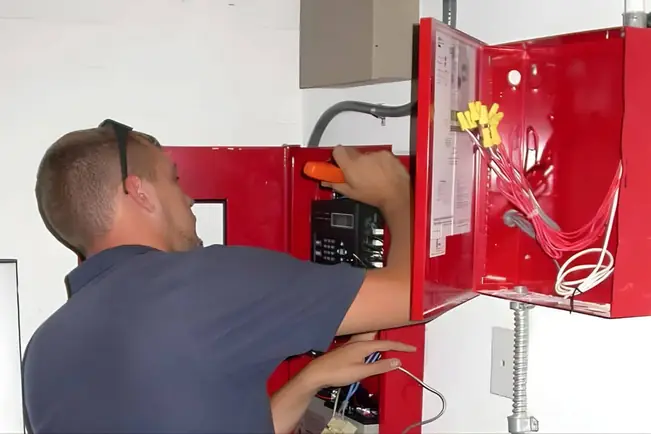
That scope is important because many owners only think about alarms as horns and strobes. In practice, the system may also monitor control equipment, communicate with supervising parties, report troubles, and interact with other building features. If a device is disabled, if a panel shows a trouble condition, or if records are missing, that can matter just as much as whether the alarm sounds.
Where Denver fits into the picture
National codes do not live in a vacuum. In Denver, local authorities enforce applicable fire code requirements. The city also requires permits for most construction, alteration, or repair work on private property. That matters to owners because a fire alarm project is rarely just a vendor swapping a few parts and leaving quietly through the back door.
Denver’s process includes fire protection engineering review, and the city states that acceptance or approval is required before final sign-off of fire alarm and fire protection permits. If you have ever been near the end of a tenant improvement project and heard someone say, “We’re basically done except for fire alarm sign-off,” you already know how critical that final step is. One unresolved issue at acceptance can hold up the closeout of the permit.
There is also a timing issue owners should know. Denver adopted new 2025 Building and Fire Codes effective December 31, 2025, and some projects may be allowed to use either the 2025 or 2022 code set depending on the submittal date. That is not a small administrative footnote. If you are planning a renovation, occupancy change, or system upgrade around that transition period, the code path for your project may depend on when documents were submitted.
That is one reason experienced planning helps. The earlier your fire alarm scope is discussed, the fewer ugly surprises show up at the end.
The simplest way to understand your role as an owner or manager
Many owners assume that code responsibility rests entirely with the contractor. Contractors absolutely have responsibilities, but owners and managers sit at the center of system readiness because you control access, budgets, records, tenant coordination, and service decisions.
In practical terms, your role usually looks like this. You need a code-compliant system for the building and occupancy involved. You need to avoid unpermitted work. You need ongoing inspection, testing, and maintenance to happen. You need documentation available when requested. And if a system is impaired or repeatedly false alarming, you need that corrected promptly rather than letting it become background noise.
That last point matters more than people think. In many buildings, a trouble signal starts as an inconvenience and slowly becomes “normal.” Then a city inspection happens, or a tenant complains, or another system issue surfaces, and everyone realizes the panel has been living with faults for months. By then, what could have been a straightforward service call may turn into a wider review.
NFPA 72 is not the same thing as NFPA 25
This is one of the most common points of confusion in commercial fire protection Colorado property managers deal with.
NFPA 72 covers fire alarm and signaling systems. NFPA 25 covers inspection, testing, and maintenance of water-based fire protection systems. So if you are talking about the alarm panel, initiating devices, notification appliances, signaling, and related functions, you are generally in NFPA 72 territory. If you are talking about sprinkler system ITM, that is generally NFPA 25 territory.
In real buildings, these systems often interact. A waterflow switch may send a signal through the fire alarm system. A supervisory condition from a sprinkler valve may appear at the fire alarm panel. That is why a fire alarm issue and a sprinkler issue can feel tied together during service and inspections even though different standards govern them.
If you are managing fire protection Denver services, it helps to stop treating each vendor visit as a separate island. Fire alarm monitoring Denver, fire sprinkler installation Denver, fire pump inspection Denver, and backflow inspection Denver all touch the broader life safety picture, even when separate standards or disciplines apply.
Why permits and approvals matter more than owners expect
A lot of expensive problems begin with one sentence: “We thought it was a minor change.”
Colorado law is clear that fire suppression system installation, modification, alteration, or repair generally cannot begin until required permits are obtained and the job has been registered, with working plans and hydraulic calculations reviewed and approved. While that specific rule speaks to fire suppression work, the larger lesson is the same across fire protection projects. Do not assume that because the physical work seems small, the permitting and approval path is optional.
Denver also makes clear that permits are required for most construction, alteration, or repair work on private property. For owners, that means the safe approach is to verify the permit path before work starts, not after someone has already changed devices, relocated equipment, or touched a life safety system during a remodel.
I have seen the management side of this problem often enough to know the pattern. A suite renovation moves walls. The electrical contractor shifts devices to match the new layout. Then someone asks whether the work was reviewed, whether acceptance testing is needed, and whether the permit sign-off can proceed. At that point, no one is arguing about code theory. They are arguing about schedule.
What inspectors in Denver are typically looking at
Denver states that commercial and institutional properties are inspected annually, with fire safety inspections typically occurring about every 12 months. Owners should take that seriously. An annual inspection is not just a quick look at the pull stations.
Denver’s published materials describe reviews that can include exits, emergency lighting, fire-resistive separations, fire lanes, and test records for fire safety systems. Violations can lead to an order notice for correction. That tells you something important about how your fire alarm records fit into the bigger inspection picture. The inspector is not only interested in whether hardware exists. They may also want to see evidence that systems have been tested and maintained.
This is where strong documentation pays for itself. When records are organized, current, and easy to produce, inspections tend to go more smoothly. When records are scattered across old emails, a former chief engineer’s desk drawer, and three different service vendors, even a decent building can look unprepared.
What “acceptance testing” means in real life
Acceptance testing sounds formal because it is formal. In practice, it is the point where the installed or modified system is put through its paces to confirm that it operates as required before final approval.
Denver notes that system acceptance testing and permits may involve coordination with the Fire Department. The city also notes that special inspections can occur outside normal business hours when needed. Owners should pay attention to that operational reality, especially in occupied spaces where testing may affect tenants, staffing, elevators, or access control routines.
Acceptance is not the moment to discover missing documentation, incorrect device programming, or coordination problems between trades. If your fire alarm contractor, electrician, sprinkler contractor, and building operations team are not aligned beforehand, acceptance day can become a public demonstration of poor communication.
A smoother path usually comes from treating acceptance like a project milestone that needs preparation, not like a box to check at the end.
Monitoring, supervision, and why “trouble” signals matter
One reason NFPA 72 exists is that life safety systems need to report more than active fire events. A functioning system also supervises itself and connected conditions. That is where trouble and supervisory signals come into the picture.
Owners do not need to master every signal type, but they should understand the basic principle. A fire alarm system is supposed to do more than scream during a fire. It should also indicate when something is wrong, impaired, or in need of attention. Ignoring those signals defeats part of the whole point of supervision.
This is especially relevant if your property has fire alarm monitoring Denver services in place. Monitoring can help communicate events off-site, but it does not replace local responsibility. If the panel shows chronic trouble conditions, someone still needs to diagnose and fix the cause. Monitoring is not magic. It is a communication layer, not a substitute for maintenance.
Records every Denver property manager should be able to find quickly
When an inspection is coming up, or after a false alarm, or during a tenant fit-out, these are the records that tend to matter most:
- recent fire alarm inspection and testing records
- service reports for repairs, troubles, or impaired devices
- permit and approval documents for recent alarm or fire protection work
- acceptance or sign-off records tied to completed projects
- contact details for the vendors responsible for alarm, sprinkler, monitoring, and related systems
That is a short list, but it solves a surprising number of headaches. It also helps during turnover. If a chief engineer retires or a property manager changes, a building should not lose its memory.
How false alarms and disabled systems become management problems
Denver specifically identifies disabled life safety systems and false alarms as part of its enforcement landscape. Owners should hear that as a warning against normalization. A recurring false alarm is not just an annoyance to tenants. A disabled life safety component is not just something to deal with next quarter. Both conditions can attract attention from the authority having jurisdiction and can expose gaps in building management.
The root causes are often ordinary. A device was damaged during construction. A tenant space was altered and the system was never properly updated. Maintenance was deferred. A panel issue lingered because the building was focused on another capital project. These are familiar stories, which is exactly why they are dangerous. Familiar problems are the easiest to ignore.
The better habit is simple. Treat any alarm irregularity like a business interruption issue, not a background technical issue. Put a name on it, assign responsibility, document what happened, and close the loop.
Renovations, tenant improvements, and the “small change” trap
If you manage mixed-use, office, retail, or institutional space, fire alarm questions often show up during ordinary tenant work. A conference room becomes two offices. A stock room turns into a break area. A reception desk shifts location. None of that sounds dramatic, but even modest layout changes can affect detection, notification, egress considerations, and permit needs.
Denver’s permitting framework is one reason these changes deserve caution. The city requires permits for most construction, alteration, or repair work on private property. If the work touches life safety systems, waiting until drywall is up to ask code questions is usually too late.
This is also where broader fire protection coordination matters. In one tenant project, the visible discussion may be about smoke detection, but the downstream conversation may include fire sprinkler installation Denver scope, review of suppression changes, or how an emergency fire protection Denver strategy needs to function across the entire suite. When those conversations happen separately, mistakes multiply.
Annual inspections are easier when you run the building with inspection in mind
Denver’s annual inspection cycle should not be treated like an interruption. The strongest operators use it as a management rhythm. They know that inspectors may review system records along with physical conditions such as exits, emergency lighting, separations, and fire lanes. So they prepare continuously rather than staging a last-minute cleanup.
That means keeping test records accessible, repairing known issues before the inspection window, and making sure building staff know where life safety documentation lives. It also means understanding that fire safety inspections Denver are not abstract compliance rituals. They are snapshots of how well the building is actually being run.
A building can have quality equipment and still perform poorly during inspection if records are incomplete or impairments are not tracked. On the other hand, an older property can often demonstrate solid management if its systems are maintained, issues are documented, and corrections are handled promptly.
A quick word on the wider fire protection picture
Fire alarms do not live alone. In many Denver properties, the owner’s compliance picture also includes fire extinguisher inspections Denver, fire pump inspection Denver, backflow inspection Denver, and sprinkler or suppression work. Those functions are related but not interchangeable.
For example, NFPA 72 does not replace the need to understand sprinkler ITM under NFPA 25. Fire system certification Colorado processes and NFPA compliance inspections Colorado reviews may involve more than one trade and more than one standard. A reliable building program recognizes the overlap without confusing the responsibilities.
That matters most in larger or more complex occupancies where a service call for one issue can reveal another. A supervisory signal on the alarm panel may point you toward a sprinkler control issue. A tenant complaint about a horn strobe may lead to a deeper conversation about acceptance records from a past remodel. The system rarely fails in neat categories.
What a practical owner mindset looks like
The owners and managers who handle NFPA 72 well are not usually code fanatics. They are organized, skeptical of shortcuts, and quick to ask a few basic questions before work begins.
When you are evaluating a project or a service issue, it helps to ask whether the work needs permitting, whether records will be updated, whether acceptance or approval is required before final sign-off, and how the change affects the rest of the building. Those four questions catch a lot of trouble early.
They also help when coordinating with vendors. If you use separate providers for commercial fire protection Colorado services, monitoring, sprinkler work, and inspections, someone on https://coloradopreparednessinsights032.greyhavendaily.com/posts/fire-extinguishers-alarms-and-sprinklers-what-each-system-does-and-does-not-do-2 the owner side needs to connect the dots. Otherwise, each contractor may perform their own piece correctly while the building still ends up with a coordination gap.
The plain-language takeaway
NFPA 72 is not just a rulebook for technicians. For Denver building owners and managers, it is a practical framework for keeping fire alarm systems dependable, inspectable, and ready when needed. It covers how the system detects events, notifies occupants, supervises itself, and stays maintained over time.
In Denver, that sits inside a local environment where the Fire Prevention Division enforces fire code requirements, annual inspections are a routine expectation, permits are required for most private property construction and alteration work, and final sign-off depends on proper acceptance or approval. Add in the code transition tied to Denver’s 2025 Building and Fire Codes, and it becomes clear that waiting until the end of a project to think about alarms is a losing strategy.
If you remember only one thing, let it be this: a fire alarm system is not finished when it is installed. It is only truly doing its job when it is approved, documented, maintained, and operating without unresolved issues. That is the standard owners should hold, whether the property is a small commercial building or a large campus with layered fire suppression systems Denver teams service year-round.